Last week’s reflection on loneliness and the search for home left me with renewed thoughts about how we adapt to our environments. We are relational beings, constantly engaged in a silent exchange with the world around us. This interaction shapes us — and, in turn, we shape it.
Internally, the search for home often takes us through many ‘towns’ — surprising or challenging emotional landscapes, each with their own terrain. We pass through them slowly, sometimes painstakingly, one step at a time, facing what emerges along the way.
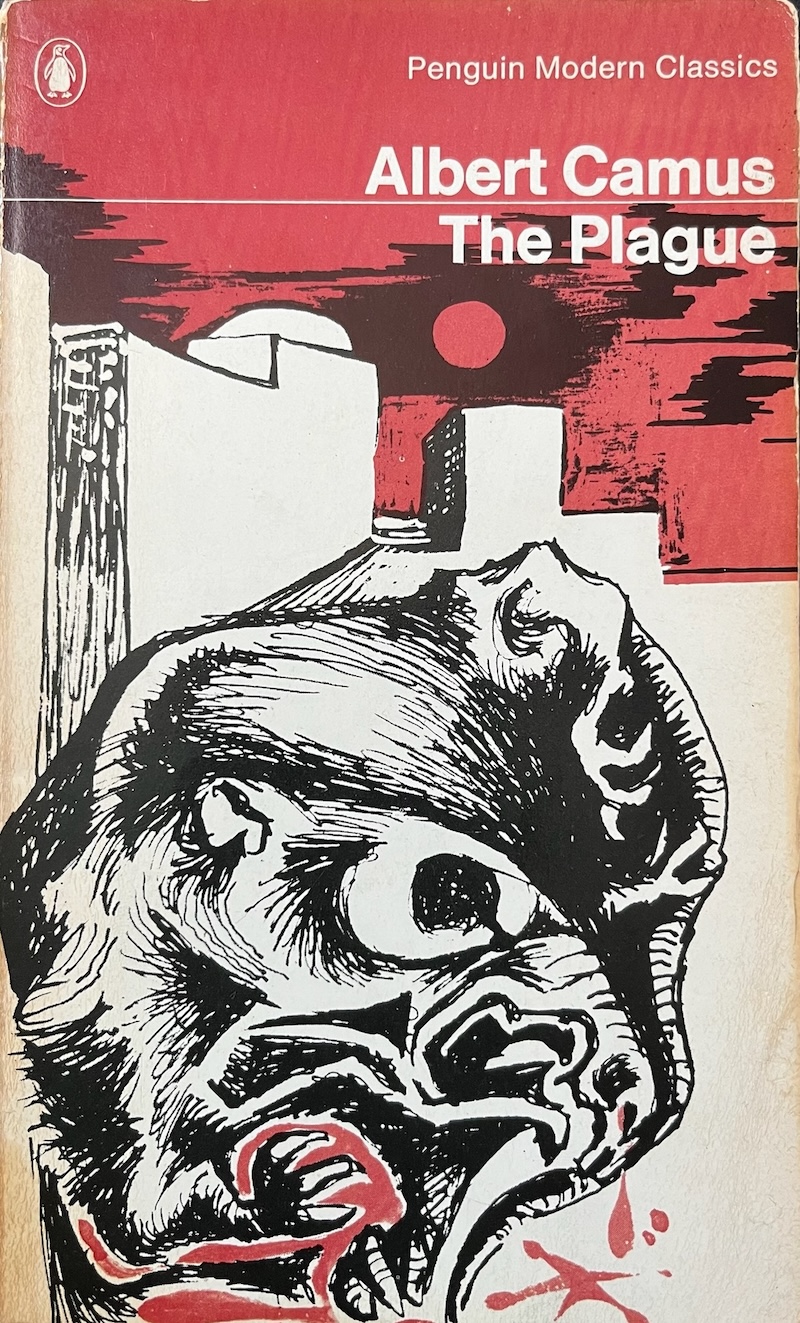
Each of these inner towns has its own order, a way of being developed over years. Some feel welcoming. Others, desolate. For me, the town called ‘Loneliness’ resembles Oran — the setting of Albert Camus’ The Plague:
“It has a smug, placid air […] a town without pigeons, without any trees or gardens, where you never hear the beat of wings […] where seasons are discriminated only in the sky”.
In The Plague, Camus presents the town of Oran under quarantine, cut off from the outside world and consumed by fear and isolation. This physical separation mirrors the emotional experience of loneliness — an invisible affliction that disconnects individuals from one another, even in the midst of shared suffering.
“[People from outside the world], from the end of the earth, across thousands of miles of land and sea, kindly, well-meaning speakers tried to voice their fellow-feeling, and indeed did so, but at the same time proved the utter incapacity of every man truly to share in suffering which he cannot see.”
The characters’ quiet endurance, their search for meaning in absurdity, and their longing for human connection all evoke the inner terrain of loneliness. The plague becomes a powerful metaphor for existential solitude — something Camus explored with painful clarity.
“No doubt, our love persisted, but in practice it served nothing; it was an inert mass within us, sterile as crime or a life sentence. It had declined on a patience that led nowhere, a dogged expectation. Viewed from this angle, the attitude of some of our fellow-citizens resembled that of the long queues one saw outside the food-shops. There was the same resignation, the same long-sufferance, inexhaustible and without illusions.”
Loneliness often feels like a long wait — a suspension in time. A yearning for what one had, for what is missing. The town lives, as Camus writes, “as if it had no future.”
This brings to mind the loss of freedom experienced by prisoners — how, in the absence of hope, one risks losing not just the mind but the soul. Czech playwright Václav Havel, who endured years of political imprisonment, wrote powerfully about the nature of hope. His reflections are featured in Paul Leob’s The Impossible Will Take a Little While: A Citizen’s Guide to Hope in a Time of Fear, a moving collection of essays and poems on how to maintain optimism in the current world:
“The kind of hope I often think about (especially in situations that are particularly hopeless, such as prison) I understand above all as a state of mind, not a state of the world. Either we have hope within us or we don’t; it is a dimension of the soul; it’s not essentially dependent on some particular observation of the world or estimate of the situation. Hope is not prognostication. It is an orientation of the spirit, an orientation of the heart; it transcends the world that is immediately experienced, and is anchored somewhere beyond its horizons.”
Loneliness can strip the soul’s internal landscape bare — like a town without birds or gardens. But even then, we can choose to remain attuned. We can stretch toward courage and possibility, nurturing these inner spaces until they begin to bloom again.
Derek Walcott’s poem Love After Love reminds us of that hope — and of the quiet act of coming home to ourselves:
LOVE AFTER LOVE
by Derek WalcottThe time will come
when, with elation,
you will greet yourself arriving
at your own door, in your own mirror,
and each will smile at the other’s welcome,
and say, sit here. Eat.
You will love again the stranger who was your self.
Give wine. Give bread. Give back your heart
to itself, to the stranger who has loved youall your life, whom you ignored
for another, who knows you by heart.
Take down the love letters from the bookshelf,the photographs, the desperate notes,
peel your own image from the mirror.
Sit. Feast on your life.
If you’d prefer to listen to the poem, you can hear it read by mindfulness teacher Jon Kabat-Zinn on On Being:
As you consider your own inner landscape, you might ask yourself:
- What does my Loneliness town look and feel like?
- Are there seasons in this town? Does anything grow there?
- What am I waiting for when I feel most alone?
- Is there something — or someone — within me I’ve forgotten to greet?
You’re warmly invited to share your reflections, poems, or pieces of writing that have helped you explore these places within yourself. Perhaps there’s a book or verse that illuminated your own quiet corners — if so, I’d love to read it. You can contribute in the comments or get in touch directly.
Together, we can begin to map these landscapes — not to escape them, but to understand them, and maybe even make them a little more inhabitable.

 Mindful Loneliness